FOR IGCSE & O-LEVEL GRADUATES · CANADIAN OSSD PATHWAY
After IGCSE or O-Levels, Choose a Proven Canadian Education
Complete the internationally recognised Ontario Secondary School Diploma through U-Can’s course-based OSSD pathway. IGCSE students typically complete 7 Ontario courses, while O-Level students typically complete 9 courses. Tuition is US $995 per course, with final course requirements confirmed after reviewing each student’s academic records.

Entry Routes
IGCSE or O-Levels
IGCSE Route
Direct Grade 12 Entry
O-Level Route
Bridging Programme
Bridge Focus
English · Maths · Science
Qualification
Ontario OSSD
Entry Routes
IGCSE or O-Levels
IGCSE Route
Direct Grade 12 Entry
O-Level Route
Bridging Programme
Bridge Focus
English · Maths · Science
Qualification
Ontario OSSD
Message from the School Director
After IGCSE or O-Levels, continue with a Canadian OSSD
Your next choice shapes your future. U-Can provides a clear route to the internationally recognised Ontario Secondary School Diploma for students entering after IGCSE or O-Levels.
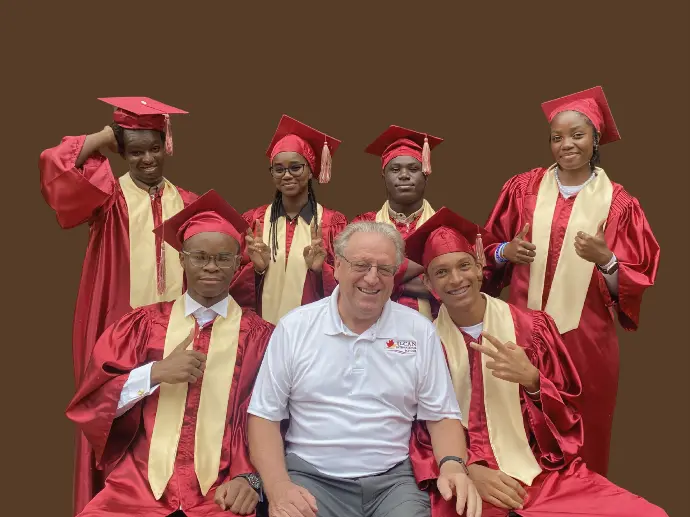

At U-Can International School, students become part of a respected Canadian educational tradition built on strong academic standards, continuous assessment, and preparation for future success.
U-Can partners with Ontario Virtual School, an Ontario Ministry of Education-inspected private school authorized to grant OSSD credits. Ontario Virtual School provides the Canadian diploma pathway, while U-Can delivers daily classroom teaching within a structured, caring, and supportive school community in Entebbe.
Students entering after IGCSE typically complete 7 Ontario secondary school courses, while students entering after O-Levels typically complete 9 courses. Each course costs US $995. Every learner receives an individual course plan based on previous studies, academic goals, and intended career direction.
This pathway gives East African students an opportunity to graduate with the Ontario Secondary School Diploma and pursue university, college, technical studies, and future opportunities in Canada and around the world.
Message from the School Director
After IGCSE or O-Levels, continue with a Canadian OSSD
Your next choice shapes your future. U-Can provides a clear route to the internationally recognised Ontario Secondary School Diploma for students entering after IGCSE or O-Levels.
At U-Can International School, students become part of a respected Canadian educational tradition built on strong academic standards, continuous assessment, and preparation for future success.
U-Can partners with Ontario Virtual School, an Ontario Ministry of Education-inspected private school authorized to grant OSSD credits. Ontario Virtual School provides the Canadian diploma pathway, while U-Can delivers daily classroom teaching within a structured, caring, and supportive school community in Entebbe.
Students entering after IGCSE typically complete 7 Ontario secondary school courses, while students entering after O-Levels typically complete 9 courses. Each course costs US $995. Every learner receives an individual course plan based on previous studies, academic goals, and intended career direction.
This pathway gives East African students an opportunity to graduate with the Ontario Secondary School Diploma and pursue university, college, technical studies, and future opportunities in Canada and around the world.
The Canadian OSSD
What is the Canadian OSSD?
The Canadian Ontario Secondary School Diploma is the official secondary school qualification granted by the Ontario Ministry of Education in Canada.
The Canadian “Ontario Secondary School Diploma” (OSSD) is the official secondary school qualification granted by the Ontario Ministry of Education in Canada.
It is recognized by universities and colleges in Canada, United States, Europe, Australia and around the world.
The Canadian OSSD programme develops knowledge, confidence, and problem-solving skills.
Key facts for parents
The Canadian OSSD
What is the Canadian OSSD?
The Canadian Ontario Secondary School Diploma is the official secondary school qualification granted by the Ontario Ministry of Education in Canada.
The Canadian “Ontario Secondary School Diploma” (OSSD) is the official secondary school qualification granted by the Ontario Ministry of Education in Canada.
It is recognized by universities and colleges in Canada, United States, Europe, Australia and around the world.
The Canadian OSSD programme develops knowledge, confidence, and problem-solving skills.
Key facts for parents
What makes the Canadian OSSD different?
A secondary school system built on steady progress, flexibility, and student success.
The Canadian OSSD programme is designed to help students build grades steadily, choose subjects that match their future goals, and develop the academic skills needed for further study.
Continuous Assessment
Students build grades steadily through coursework, projects, assignments, and tests.
Flexible Learning
Students choose subjects that match their strengths and future goals.
Focus on Core Academic Subjects
Special emphasis on English, Mathematics, and Science.
Literacy & Communication
Develops strong English literacy and communication skills.
Community Service Requirement
Community service encourages responsibility, leadership, and civic involvement.
For over 30 years, Canada has developed an internationally respected secondary school system focused on steady progress, flexibility, and student success.
What makes the Canadian OSSD different?
A secondary school system built on steady progress, flexibility, and student success.
The Canadian OSSD programme is designed to help students build grades steadily, choose subjects that match their future goals, and develop the academic skills needed for further study.
Continuous Assessment
Students build grades steadily through coursework, projects, assignments, and tests.
Flexible Learning
Students choose subjects that match their strengths and future goals.
Focus on Core Academic Subjects
Special emphasis on English, Mathematics, and Science.
Literacy & Communication
Develops strong English literacy and communication skills.
Community Service Requirement
Community service encourages responsibility, leadership, and civic involvement.
For over 30 years, Canada has developed an internationally respected secondary school system focused on steady progress, flexibility, and student success.
Choose a Course Direction Aligned to Future Study Goals
Course selection depends on the student’s entry route, academic record, required credits and intended university pathway. U-Can guides students in selecting OSSD courses that support future study areas such as medicine, engineering, business, social sciences and computer science.
Important: The examples below show common pathway-aligned course directions. Final course selection is reviewed individually based on the student’s previous qualification, required OSSD credits, academic strengths and university goals.
Medicine Pathway
For students interested in medicine, nursing, pharmacy, public health and related health science programmes.
English · Mathematics · Biology · Chemistry · Scientific literacy
Biology · Chemistry · Advanced Functions · Calculus & Vectors · Kinesiology
Engineering Pathway
For students interested in civil, mechanical, electrical, software and other engineering-related programmes.
English · Mathematics · Physics · Chemistry · Problem-solving
Advanced Functions · Calculus & Vectors · Physics · Chemistry · Data Science / Computer Science
Business Pathway
For students interested in finance, management, economics, entrepreneurship, law and related business programmes.
English · Mathematics · Business thinking · Economics · Communication
Business Fundamentals · Financial Accounting · Business Leadership · Advanced Functions · Analysing Economic Issues
Social Sciences Pathway
For students interested in law, politics, psychology, humanities, development studies and social research.
English · Critical thinking · Law · Politics · Human behaviour
Philosophy · Canadian & International Law · Politics · Challenge & Change · Human Growth & Development
Computer Science Pathway
For students interested in artificial intelligence, data science, cybersecurity, software development and digital technology.
English · Mathematics · Computing · Logic · Digital problem-solving
Computer Science · Data Science · Advanced Functions · Calculus & Vectors · Technological Design
Every Student’s Course Plan Is Reviewed
U-Can reviews each student’s documents, previous subjects, academic performance and future goals before confirming the final course plan. This ensures the pathway is practical, realistic and aligned with post-secondary entry requirements.
Choose a Course Direction Aligned to Future Study Goals
Course selection depends on the student’s entry route, academic record, required credits and intended university pathway. U-Can guides students in selecting OSSD courses that support future study areas such as medicine, engineering, business, social sciences and computer science.
Important: The examples below show common pathway-aligned course directions. Final course selection is reviewed individually based on the student’s previous qualification, required OSSD credits, academic strengths and university goals.
Medicine Pathway
For students interested in medicine, nursing, pharmacy, public health and related health science programmes.
English · Mathematics · Biology · Chemistry · Scientific literacy
Biology · Chemistry · Advanced Functions · Calculus & Vectors · Kinesiology
Engineering Pathway
For students interested in civil, mechanical, electrical, software and other engineering-related programmes.
English · Mathematics · Physics · Chemistry · Problem-solving
Advanced Functions · Calculus & Vectors · Physics · Chemistry · Data Science / Computer Science
Business Pathway
For students interested in finance, management, economics, entrepreneurship, law and related business programmes.
English · Mathematics · Business thinking · Economics · Communication
Business Fundamentals · Financial Accounting · Business Leadership · Advanced Functions · Analysing Economic Issues
Social Sciences Pathway
For students interested in law, politics, psychology, humanities, development studies and social research.
English · Critical thinking · Law · Politics · Human behaviour
Philosophy · Canadian & International Law · Politics · Challenge & Change · Human Growth & Development
Computer Science Pathway
For students interested in artificial intelligence, data science, cybersecurity, software development and digital technology.
English · Mathematics · Computing · Logic · Digital problem-solving
Computer Science · Data Science · Advanced Functions · Calculus & Vectors · Technological Design
Every Student’s Course Plan Is Reviewed
U-Can reviews each student’s documents, previous subjects, academic performance and future goals before confirming the final course plan. This ensures the pathway is practical, realistic and aligned with post-secondary entry requirements.
From IGCSE or O-Levels to the Ontario Secondary School Diploma.
Continue your education in Entebbe with an internationally recognized Canadian secondary qualification. Final course requirements are tailored to each student's previous study, academic goals, and course selection.
| Course tuition | US $995 per Ontario secondary school course. |
|---|---|
| IGCSE graduates | Typically complete 7 Ontario courses. Tuition starts from US $6,965 |
| O-Level graduates | Typically complete 9 Ontario courses. Tuition starts from US $8,955 |
Final requirements and tuition are confirmed after reviewing each student's documents.
Programme Essentials
- Daily in-class tuition and academic support
- Internet access
- Workbooks and all learning materials
- Extracurricular activities
- Freshly prepared nutritious lunch
- University and college application guidance
Transport Fees - Optional
Transport availability is subject to the school's confirmed routes.
Courses Selected for Each Student
- Over 40 Ontario secondary courses are available
- Course choices reflect prior studies, academic goals, and career plans
- University and college application guidance is included
Additional Charges
| Registration Fee | US $300 upon application |
|---|---|
| Document Evaluation | US $150 for non-standard documents |
| Uniform Fee | US $80 or UGX 300,000 |
Uniform includes a shirt, trousers, hoodie, two sports kits, socks, and a branded T-shirt.
Need help choosing the right courses?
Speak with the admissions team for a review of prior studies, course requirements, total tuition, and application documents.
From IGCSE or O-Levels to the Ontario Secondary School Diploma.
Continue your education in Entebbe with an internationally recognized Canadian secondary qualification. Final course requirements are tailored to each student's previous study, academic goals, and course selection.
| Course tuition | US $995 per Ontario secondary school course. |
|---|---|
| IGCSE graduates | Typically complete 7 Ontario courses. Tuition starts from US $6,965 |
| O-Level graduates | Typically complete 9 Ontario courses. Tuition starts from US $8,955 |
Final requirements and tuition are confirmed after reviewing each student's documents.
Programme Essentials
- Daily in-class tuition and academic support
- Internet access
- Workbooks and all learning materials
- Extracurricular activities
- Freshly prepared nutritious lunch
- University and college application guidance
Transport Fees - Optional
Transport availability is subject to the school's confirmed routes.
Courses Selected for Each Student
- Over 40 Ontario secondary courses are available
- Course choices reflect prior studies, academic goals, and career plans
- University and college application guidance is included
Additional Charges
| Registration Fee | US $300 upon application |
|---|---|
| Document Evaluation | US $150 for non-standard documents |
| Uniform Fee | US $80 or UGX 300,000 |
Uniform includes a shirt, trousers, hoodie, two sports kits, socks, and a branded T-shirt.
Need help choosing the right courses?
Speak with the admissions team for a review of prior studies, course requirements, total tuition, and application documents.
What Our Alumni Are Doing
U-Can graduates continue to pursue university, sport, leadership, and professional pathways in Canada and beyond, carrying with them the confidence and preparation built during their time at school.
I am currently a second-year student at St. Thomas University in Canada. I am pursuing a double major in Human Rights and Sustainability & Environmental Studies, with minors in French and Spanish. I am happy I made the Dean’s List.
Since graduating from U-Can, I’ve begun my first year at Ontario Tech University, and the transition has been both exciting and challenging. Looking back, the support and preparation I received from U-Can played a big role in helping me reach this point.
I play volleyball professionally in Uganda’s National Women’s League. I have competed in tournaments in Uganda, Kenya, Rwanda, and Italy, and captained Uganda’s U-20 National Women’s Volleyball team. This year I will be joining Western University in Ontario, Canada.
What Our Alumni Are Doing
U-Can graduates continue to pursue university, sport, leadership, and professional pathways in Canada and beyond, carrying with them the confidence and preparation built during their time at school.
I am currently a second-year student at St. Thomas University in Canada. I am pursuing a double major in Human Rights and Sustainability & Environmental Studies, with minors in French and Spanish. I am happy I made the Dean’s List.
Since graduating from U-Can, I’ve begun my first year at Ontario Tech University, and the transition has been both exciting and challenging. Looking back, the support and preparation I received from U-Can played a big role in helping me reach this point.
I play volleyball professionally in Uganda’s National Women’s League. I have competed in tournaments in Uganda, Kenya, Rwanda, and Italy, and captained Uganda’s U-20 National Women’s Volleyball team. This year I will be joining Western University in Ontario, Canada.
Student Life at U-Can
Situated along the shores of Lake Victoria in Entebbe, the campus offers a calm, secure, and distraction-free setting conducive to serious academic study.
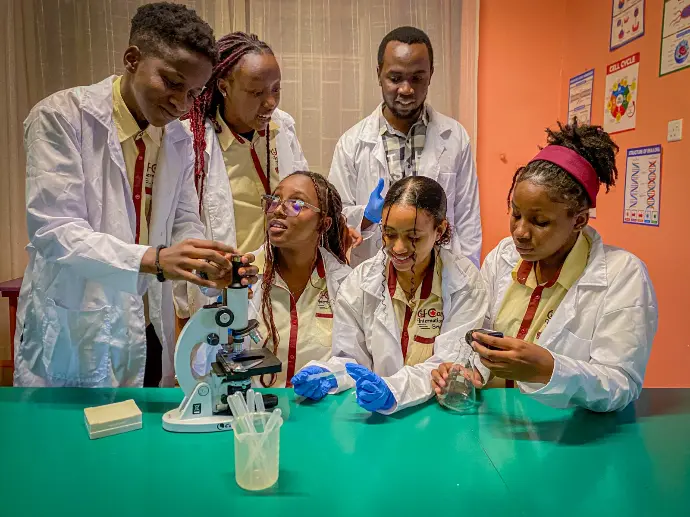
A focused setting for serious academic progress
Smaller class sizes enable individualised instruction, close academic monitoring, and meaningful teacher-student engagement.
Fast-Track students benefit from a structured daily programme that promotes discipline, time management, and independent learning, key expectations within the Canadian education framework.
Structured Daily Programme
The school day runs from 8:00 am to 4:00 pm, Monday to Friday, helping students maintain focus, routine, and academic discipline.
Individualised Support
Smaller class sizes allow teachers to monitor progress closely, support each learner, and guide students through the accelerated programme.
Lake Victoria Setting
The calm Entebbe campus environment gives students a peaceful setting for focused learning, reflection, and steady academic growth.
Physical Education
Students participate in physical education and sports activities that support balance, well-being, discipline, and teamwork.
Inter-School Sports
Students have opportunities to participate in inter-school sports, helping them build confidence, resilience, and school spirit.
Social & Cultural Events
Beyond the classroom, students participate in social and cultural events that support balance, confidence, and meaningful school life.
Student Life at U-Can
Situated along the shores of Lake Victoria in Entebbe, the campus offers a calm, secure, and distraction-free setting conducive to serious academic study.
A focused setting for serious academic progress
Smaller class sizes enable individualised instruction, close academic monitoring, and meaningful teacher-student engagement.
Fast-Track students benefit from a structured daily programme that promotes discipline, time management, and independent learning, key expectations within the Canadian education framework.
Structured Daily Programme
The school day runs from 8:00 am to 4:00 pm, Monday to Friday, helping students maintain focus, routine, and academic discipline.
Individualised Support
Smaller class sizes allow teachers to monitor progress closely, support each learner, and guide students through the accelerated programme.
Lake Victoria Setting
The calm Entebbe campus environment gives students a peaceful setting for focused learning, reflection, and steady academic growth.
Physical Education
Students participate in physical education and sports activities that support balance, well-being, discipline, and teamwork.
Inter-School Sports
Students have opportunities to participate in inter-school sports, helping them build confidence, resilience, and school spirit.
Social & Cultural Events
Beyond the classroom, students participate in social and cultural events that support balance, confidence, and meaningful school life.
Frequently Asked Questions
Helpful answers for families considering U-Can’s Canadian OSSD pathway after IGCSE or O-Levels, including course requirements, tuition, university pathways, school life and admissions.
The Ontario Secondary School Diploma, or OSSD, is the official secondary school qualification granted by the Ontario Ministry of Education in Canada. It is recognised by universities and colleges in Canada and around the world.
Yes. Students entering after IGCSE typically complete 7 Ontario secondary school courses. Final course requirements are confirmed after reviewing the student’s academic documents and future study goals.
Yes. Students entering after O-Levels typically complete 9 Ontario secondary school courses. Final course requirements are confirmed after reviewing the student’s academic documents and future study goals.
IGCSE students typically complete 7 Ontario courses, while O-Level students typically complete 9 courses. The exact number and selection of courses depend on the student’s previous studies, academic goals and intended university pathway.
Each Ontario secondary school course costs US $995. The final tuition amount depends on the number of courses confirmed in the student’s individual course plan.
Admissions reviews the student’s academic records, completed subjects and future study goals. U-Can then confirms the Ontario courses required to complete the student’s OSSD pathway.
The duration depends on the student’s confirmed course plan, timetable and academic progress. IGCSE students typically complete 7 courses, while O-Level students typically complete 9 courses. Admissions will confirm the expected study period after reviewing the student’s documents.
Canadian education is internationally respected for strong academic standards, continuous assessment, flexibility and preparation in English, Mathematics and Science. Students build grades steadily through coursework, assignments, projects and tests.
Graduates may pursue university, college and technical studies in Canada and internationally. U-Can supports students as they explore future study options aligned with their academic goals.
Students receive academic guidance, subject pathway planning and practical support as they prepare for university, college and future study opportunities in Canada and around the world.
Classes run from 8:00 am to 4:00 pm, Monday to Friday. The structured school day helps students stay focused, disciplined and on pace with coursework and assignments.
Yes. Freshly prepared nutritious lunches are included as part of the school programme.
Yes. Students participate in extra-curricular and sports activities, including options such as football, basketball and volleyball during breaks and after school.
Frequently Asked Questions
Helpful answers for families considering U-Can’s Canadian OSSD pathway after IGCSE or O-Levels, including course requirements, tuition, university pathways, school life and admissions.
The Ontario Secondary School Diploma, or OSSD, is the official secondary school qualification granted by the Ontario Ministry of Education in Canada. It is recognised by universities and colleges in Canada and around the world.
Yes. Students entering after IGCSE typically complete 7 Ontario secondary school courses. Final course requirements are confirmed after reviewing the student’s academic documents and future study goals.
Yes. Students entering after O-Levels typically complete 9 Ontario secondary school courses. Final course requirements are confirmed after reviewing the student’s academic documents and future study goals.
IGCSE students typically complete 7 Ontario courses, while O-Level students typically complete 9 courses. The exact number and selection of courses depend on the student’s previous studies, academic goals and intended university pathway.
Each Ontario secondary school course costs US $995. The final tuition amount depends on the number of courses confirmed in the student’s individual course plan.
Admissions reviews the student’s academic records, completed subjects and future study goals. U-Can then confirms the Ontario courses required to complete the student’s OSSD pathway.
The duration depends on the student’s confirmed course plan, timetable and academic progress. IGCSE students typically complete 7 courses, while O-Level students typically complete 9 courses. Admissions will confirm the expected study period after reviewing the student’s documents.
Canadian education is internationally respected for strong academic standards, continuous assessment, flexibility and preparation in English, Mathematics and Science. Students build grades steadily through coursework, assignments, projects and tests.
Graduates may pursue university, college and technical studies in Canada and internationally. U-Can supports students as they explore future study options aligned with their academic goals.
Students receive academic guidance, subject pathway planning and practical support as they prepare for university, college and future study opportunities in Canada and around the world.
Classes run from 8:00 am to 4:00 pm, Monday to Friday. The structured school day helps students stay focused, disciplined and on pace with coursework and assignments.
Yes. Freshly prepared nutritious lunches are included as part of the school programme.
Yes. Students participate in extra-curricular and sports activities, including options such as football, basketball and volleyball during breaks and after school.